Wales Online Winter 2025
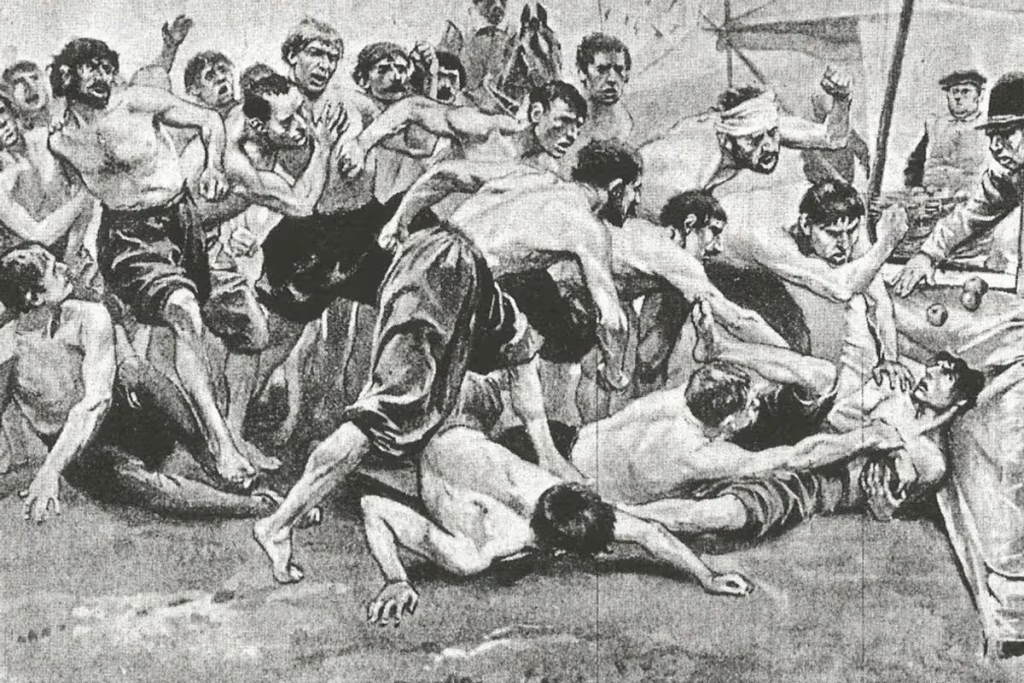
Badminton Magazine of Sports and Pastimes. Volume VI, January to June 1898, pp. 521-524.
Today rugby is considered to be a combative, relentless, and sometimes brutal sport that is central to Welsh culture and identity. But centuries before its conception a different contest gripped the nation which would have made modern rugby seem like child’s play.
Knappan, also known as cnapan, was a medieval ball game that drew hundreds or thousands of men into chaotic clashes across fields, villages, and open countryside. Players took part either barefoot or on horseback and sometimes stripped naked to avoid their clothes being ripped to shreds as they battered each other with sticks and rocks.
More than just a sport, the game was used to settle vendettas and local disputes and commonly ended with injured players. Death was also likely a feature, placing it far beyond the health and safety restrictions of today.
Author Brendan Murphy has spent time researching the now-extinct sport for his new book The Game That Would Be King: The Uncharted History of Soccer 800-1800 AD.
Speaking to WalesOnline he said the first mention of knappan was in 1558 with its first description having been written by Welsh author George Owen of Henllys at around 1603.
Brendan said: “It was only played in south[west] Wales, mainly around the Pembrokeshire area – there’s no mention of it having been played in north Wales.
“There are two sides and a small wooden ball. They have to carry across three or four miles to get it to a goal.
“There could be up to 2,000 players so it was very full-on. There were probably about 400 or 500 players involved at once split between two teams.
“They had people running on foot but they also had people on horseback and the people on horseback were allowed to carry cudgels and hit people.
“The people running were allowed to carry stones and throw stones at people on horseback and pull them off.
“There were a lot of injuries and broken bones and people probably died if they got a blow to the head with a cudgel.”
He said droves of people would gather to watch knappan but they had to be careful not to stand too close unless they too wanted to take part in the deadly game.
“Ad hoc games took place on holy days,” he said. “There was a carnival atmosphere with people drinking wine and merchants of all sorts.
“Multitudes of people would stand by and watch on horseback and if you stood too close by you were dragged down and made to play.”
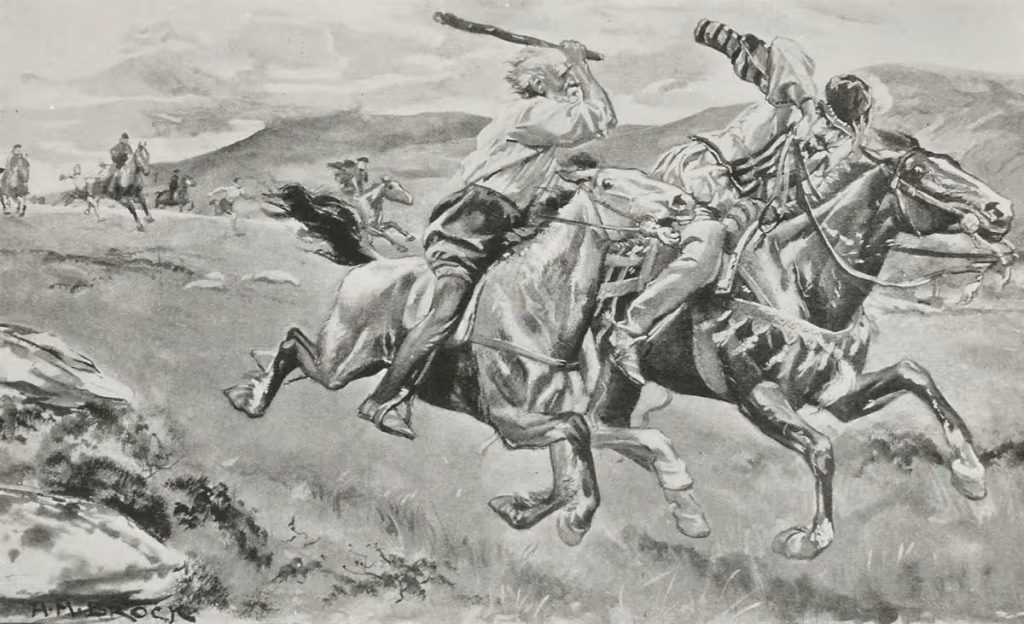
Badminton Magazine of Sports and Pastimes. Volume VI, January to June 1898, pp. 521-524.
Drawing from the writing of George Owen author Brendan explained how the game was used to settle disputes.
He said: “Quite a few vendettas were settled – so if you wanted to have a go at the guy who beat your brother or that kind of thing.”
Owen’s own account reads: “At this play private grudges are revenged… which being once kindled all persons on both sides become parties so that you shall see 500 or 600 naked men beating in a cluster together as faste as the fiste can goe.
“Brother against brother, man against master, friend against friend… They will not scruple to pick up stones and use them in their fist.”
According to Owen there were five annual fixtures: “The first at Bury sands between the parishes of Nevern and Newport upon Shrove Tuesday yearly,” he wrote.
“The second at Portheinon, on Easter Monday, between the parishes of Meline and Eglwyswrw; the third on low Easterday at Pwll-du in Penbedw between the parishes Penrhydd and Penbedw.
“The fourth and fifth [were at] St Meigans in Cemais between Cemais men of the one party, and Emlyn men, and the men of Cardiganshire with them of the other party, the first upon Ascension Day, the other upon Corpus Christi day.
“These two last were the great and main places, far exceeding any of the former in multitude of people for at these places there have oftentimes been esteemed 2,000 foot beside horsemen.”
Brendan said an interesting aspect of the sport is that the game involved a scrum of sorts – which is an aspect used in modern rugby as a means of restarting play after a minor infringement.
He explained that although knappan may well have influenced rugby, the two have a distinct history.
He said: “It’s unclear whether [knappan] had external influence because it wasn’t heard of until after the Normans invaded. There may have been a Norman element.
“When the Normans came over they brought a lot of Bretons with them – people from Brittany. Bretons played a game called soule which is kind of similar but more like mob football.
“It could also have some Flemish influence because Flemings – from Belgium – settled in south Wales.
“[In terms of rugby] two villages mainly across England would do a similar thing – they’d have a ball and there would be two goals which could be a wall in the countryside or a column in the town square.
“Each side would have to get the ball in their goal and it was a pretty vicious game.
“Gradually that split into a more formalised game that took place in more discreet areas like fields and entailed running, carrying, kicking.
“It wasn’t until the 1800s that they separated into football and into rugby. It wasn’t principally from Wales [but] the oldest rugby club in Wales was in Neath, south Wales.”
Meanwhile there were many similar games played across the UK. Brendan said: “There were similar sports that were contemporaneous in different pockets around the UK. Camping was a similar sport played in East Anglia and there was Cornish hurling.”
Brendan said he estimates that knappan died out by the 1700s when records of the sport appear to diminish.
However he said at one time the game “was part of the fabric of south Wales culture” just like rugby is today.
